AI is an increasingly important part of bug bounty programs. It widens attack-surface coverage, speeds up triage, and helps researchers move faster. It can also produce a wave of low-effort, AI-generated slop that programs now have to filter out. The reports that demonstrate real, exploitable impact, the ones where two or three ordinary-looking issues chain together into something serious, still come from people.
Bug bounty programs tend to get discussed in terms of tooling and dashboards. The people actually doing the work, researchers who put in the hours to understand a system well enough to find what automated tools miss, rarely get named directly.
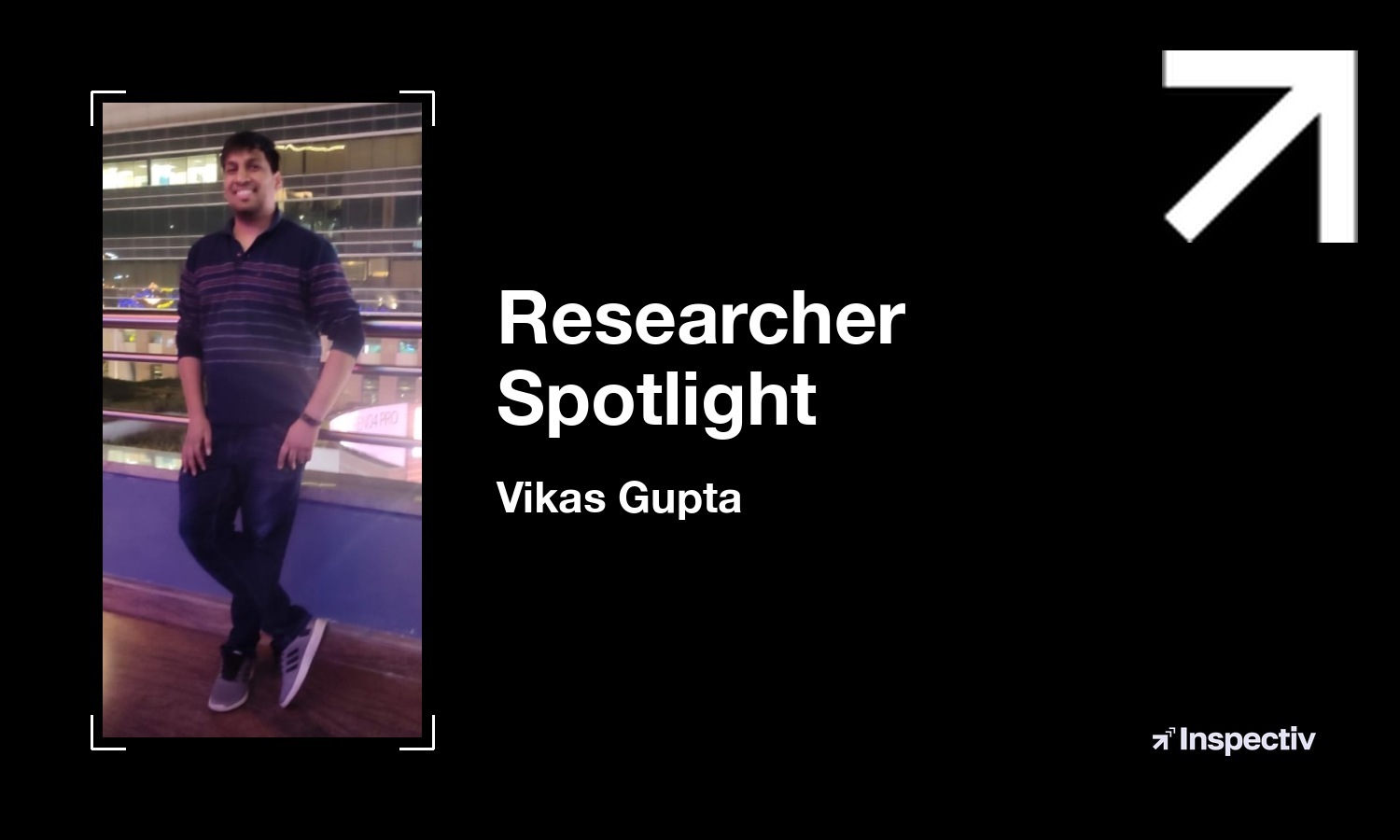
That’s why we’re shining a spotlight on Vikas Gupta. Vikas has been an Inspectiv researcher since the company’s early days and he consistently ranks among Inspectiv’s one or two highest-paid researchers. He's always open to sharing methodologies, tactics, and new exploits and he has built strong relationships with the Inspectiv triage team over time. The way that Vikas operates exemplifies the very best of ethical hacking, and the heart of bug bounty.
Vikas's Story
Vikas holds a degree in Software Engineering from Thapar Institute of Engineering and Technology and has spent more than five years in cybersecurity and full-stack development. Across his career he's reported over 700 security vulnerabilities, including CVE discoveries, and he stays active in the security community through OWASP Chandigarh and conferences like DefCon and BSides. Outside of client work, he builds and shares his own security tooling and stays active across full-stack development (JavaScript, Python, PHP) alongside his security research.
He specializes in vulnerability research, automation, and threat detection, work that includes building detection rules, strengthening Attack Surface Intelligence (ASI), and translating complex vulnerabilities into insights teams can act on. He's also developed his own techniques for identifying CVEs by reading metadata and behavioral patterns rather than waiting on a known signature, the same pattern-finding instinct that shows up in his Inspectiv work. This is the kind of creative work that sets Vikas apart from most researchers.
Habits of a High-Payout Researcher
One of the biggest levers for a higher payout: chaining multiple issues together rather than reporting them in isolation. Inspectiv’s guide for researchers points to examples like combining an IDOR with cross-tenant XSS, or pairing broken access control with SQL injection, arguing that the more complexity and impact a chained report demonstrates, the higher the payout. Vikas is especially skilled at exactly this: combining findings that would each individually rate as low or medium severity but together escalate to a Critical severity.
A simplified illustration of the pattern, not a specific reported finding: imagine an endpoint that leaks slightly more metadata than it should, paired with a permissions check that's technically correct but never accounts for one particular edge case. Neither issue alone would raise much concern in a report. Together, they can let an attacker infer exactly which record to target and then reach it.
The same guide for researchers also points to a second, less technical factor that influences success: researchers who consistently show professionalism, respect, and ingenuity tend to get more out of the relationship over time, including access to high-value private bug bounty programs and more focused assignments requested by customers. Vikas puts this into practice in many ways, including jumping on live sessions with Inspectiv’s triage team to walk through his exploits and techniques directly. In addition to being a skilled researcher, he's responsive and collaborative, a true team player.
How This Fits Into Inspectiv's Platform
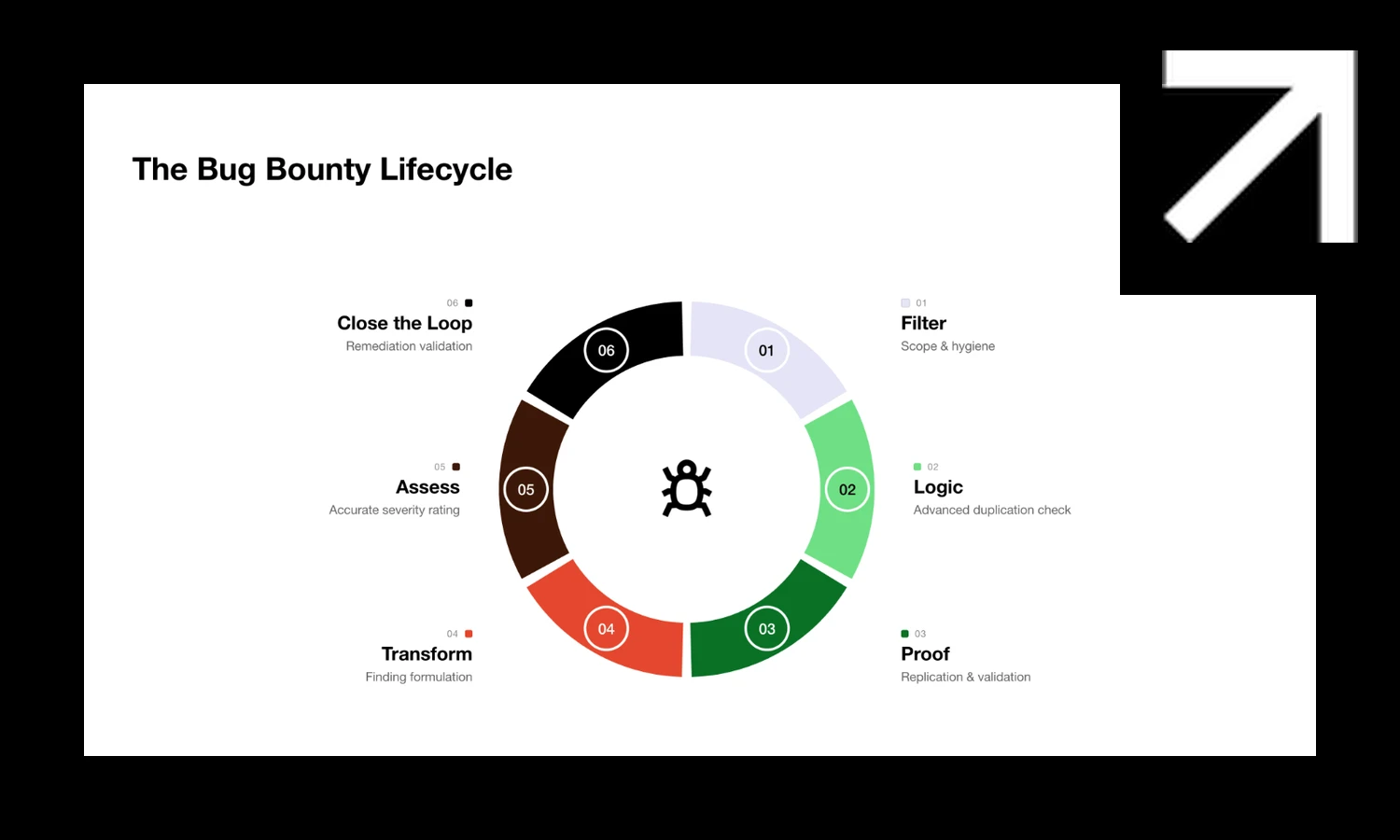
Inspectiv's next-gen platform leverages AI processes as well as human security researchers, oftentimes combined, on the same programs. AI supports attack-surface coverage and initial triage; every submission is still validated and standardized by the triage team. Vikas is a concrete example of what the researcher side of that system looks like in practice. And that system works: 80% of Inspectiv customers receive a Critical finding in their first two months, and more than half of their security noise is reduced through validated, prioritized findings.
If you're a company that wants that kind of researcher looking at your attack surface, reach out to get a demo.
If you're a researcher who thinks you could hold your own alongside people like Vikas, explore Inspectiv's researcher community and the step-by-step guide to maximizing security payouts.












.svg?width=32&height=32&name=icon%20(1).svg)
.svg?width=32&height=32&name=icon%20(2).svg)
.svg?width=32&height=32&name=icon%20(3).svg)