Continuous Threat Exposure Management (CTEM)

Inspectiv-Platform-Image

What Is Continuous Threat Exposure Management?

Continuous Threat Exposure Management is an ongoing approach to identifying, validating, and reducing the ways an organization can be compromised. It expands beyond traditional vulnerability scanning to cover misconfigurations, identity risks, external assets, cloud services, and other real-world exposure points. Using adversarial methods - such as bug bounty and pen testing - to truly see if there are unaddressed exploit opportunities drives CTEM and reduces risk.

How CTEM Differs from Traditional Vulnerability Management

Traditional VM produces long lists of technical findings. CTEM focuses on what's actually exploitable, what affects critical assets, and what needs action now—supported by continuous discovery, validation, and cross-team mobilization. It has a more holistic approach to risk, rather than just assigning risk levels to assets without context.

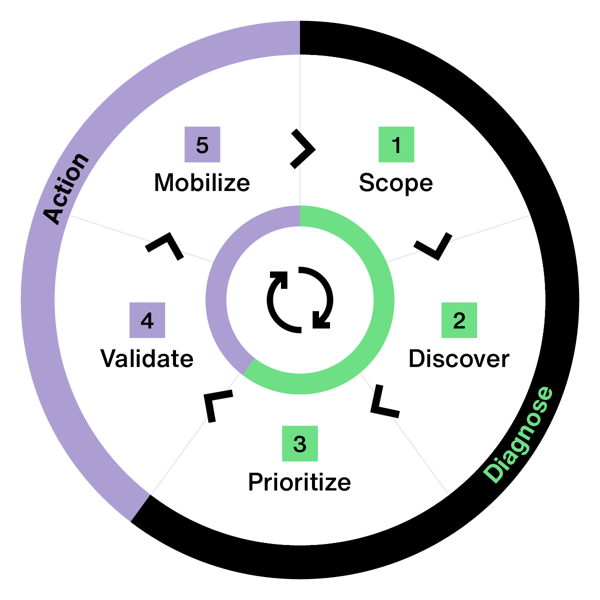
Screenshot from 2025-12-22 19-09-19

The Five Steps to Build a Modern CTEM Program with Inspectiv

CTEM Cycle - Inspectiv

Why Continuous Threat Exposure Management Matters

Attack surfaces evolve daily. New deployments, new identities, and new integrations create exposure faster than periodic scanning can detect. CTEM provides a process that delivers ongoing visibility and business-aligned prioritization required to stay ahead of emerging risks.

CTEM vs Traditional Approaches

How Inspectiv Supports a CTEM Program

Who Owns CTEM? Security Team Roles & Collaboration

CTEM requires shared ownership to deliver on its risk reduction promise:

  • Security teams for continuous discovery and validation
  • IT and engineering for remediation
  • Cloud, DevOps, and application teams for environment-specific fixes
  • Risk and leadership for alignment and prioritization

Strong collaboration is what turns CTEM from a process into a repeatable, measurable practice.

Getting Started With Continuous Threat Exposure Management

Identify the assets and systems that matter most.

Establish continuous discovery.

Add validation to eliminate noise.

Prioritize based on business impact.

Create a cross-team remediation workflow.

Use Inspectiv to operationalize CTEM efficiently and effectively.

FAQ's

Organizations deploying CTEM usually have many questions. Here are the ones we hear the most at Inspectiv.