Platform
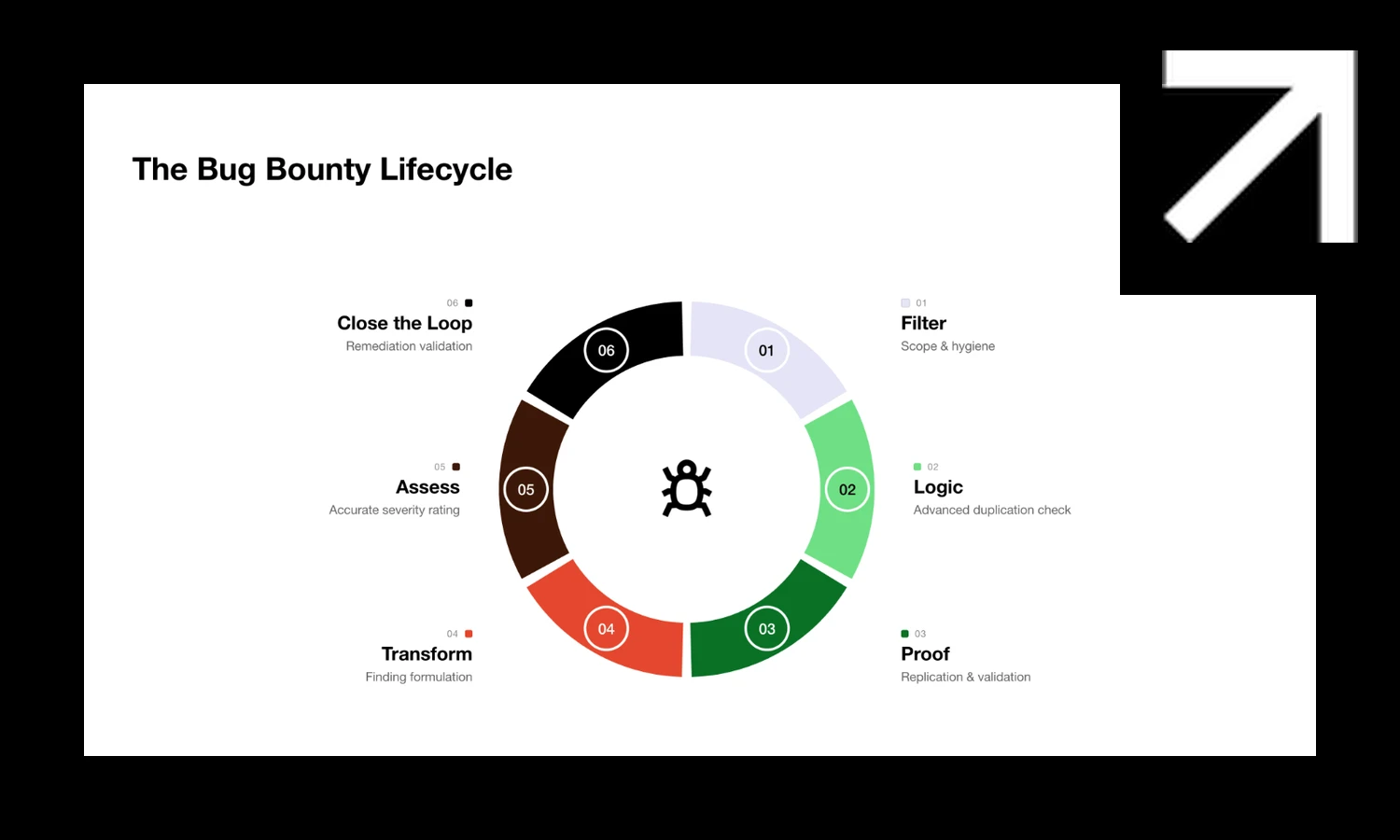
Explore Inspectiv’s AI-enabled platform that integrates Bug Bounty, Pentesting, Feature Testing, and VDP, designed to cut through noise and deliver signal-driven results.

Platform
Explore Inspectiv’s AI-enabled platform that integrates Bug Bounty, Pentesting, Feature Testing, and VDP, designed to cut through noise and deliver signal-driven results.

Bug Bounty
Continuously discover high-impact vulnerabilities, without the overhead of traditional bug bounty programs.

Penetration Testing
Stay audit-ready and reduce risk with expert-led testing and flexible retesting support.
See Inspectiv in Action!
Schedule a live demo to see how our platform helps you manage vulnerabilities, reduce noise, and stay compliant.
See Inspectiv in Action!
Schedule a live demo to see how our platform helps you manage vulnerabilities, reduce noise, and stay compliant.

Inspectiv Insights
July 7, 2026
Recent Inspectiv findings, and what do to about them.
Read the latest insights
Continuous pentesting gives security teams real-time visibility into emerging threats, validated findings they can trust, and a cleaner signal for prioritizing remediation. It fills the gaps left by traditional penetration testing and static scanners, strengthening the overall security posture while supporting compliance and modern offensive security practices. Further, developers can expect anything they ship to be pentested at any time - using automated tools, human creativity, or both. This mindset often helps increase attention to security earlier in the SDLC, when it is most cost-effective to find and fix issues.
Continuous pentesting works alongside practices like structured pentesting engagements, bug bounty programs, and attack surface management to give organizations a clearer picture of how their environment evolves. In this article, we’ll explore how this always-on approach strengthens vulnerability management, improves remediation speed, and supports a more adaptive security posture for your organization.
Continuous pentesting strengthens vulnerability management by giving security teams immediate, validated insights instead of waiting weeks or months between scheduled tests. Often a standard penetration test’s work-in-progress is unusable until a final report - often a PDF - is written. The continuous model simulates real-world attacks against evolving systems, helping organizations detect and prioritize vulnerabilities in real time.
Because attackers operate continuously, defensive testing must match their pace. Continuous pentesting provides the ongoing coverage that traditional penetration testing can’t, improving visibility across the entire attack surface and revealing issues that appear after new releases, new cloud assets, or third-party integrations.
This approach complements other security practices, it doesn’t replace it. Scanners and compliance tests still play their role, but continuous penetration testing uncovers logic flaws, chaining opportunities, and attack paths that automated tools miss.
Traditional penetration testing gives teams a point-in-time report. It’s most helpful for compliance requirements, and often gets forgotten leading to lengthy remediation times. Continuous pentesting solves this by:
This elevates vulnerability management from reactive cleanup to a proactive, continuous process grounded in validated insights, not noise.
The process blends automation for broad reconnaissance with human-led offensive security testing for depth and context. Findings are delivered in real time through a central platform, allowing teams to respond as soon as issues are discovered.
Most organizations combine continuous pentesting with:
These layers work together to reveal unknown risks and help security leaders refine their overall security posture.
Security teams often ask how continuous pentesting differs from traditional penetration testing. The differences show up in several important areas:
Traditional testing: Annual or quarterly
Continuous testing: Weekly, daily, or event-driven
Traditional: Scoped to a fixed set of assets
Continuous: Expands as the environment grow
Traditional: Weeks or months between tests
Continuous: Issues found shortly after code changes or asset creation
Traditional: A static report
Continuous: A stream of validated, real-time findings with remediation guidance
Continuous pentesting identifies vulnerabilities that arise from constant change, including:
These issues often appear after new deployments, which is why continuous coverage matters.
Fast remediation depends on high-quality input. Continuous penetration testing strengthens remediation by:
Security engineers often face delays because findings from automated scanners need manual validation. Continuous pentesting solves this with expert triage and human-verified results, allowing engineering teams to spend more time resolving issues, rather than confirming them.
Modern frameworks expect continuous validation, not one-time checks. Continuous pentesting supports compliance programs such as:
These standards often require ongoing validation of controls, continuous monitoring, and documented remediation workflows. See how the Inspectiv platform brings everything together in one place.
A strong offensive security program includes three components:
Continuous pentesting occupies the adaptability layer. It helps organizations respond quickly to emerging threats, shifts in the threat landscape, and new attack paths introduced through rapid development.
It also improves visibility across the continuous attack surface, revealing risks early and reducing the chance of blind spots.
Security leaders want to measure the value of continuous testing. Several metrics make ROI clear and trackable:
These metrics help security leaders report outcomes to executives and prove the value of continuous offensive security.
Continuous penetration testing provides ongoing real-world assessments that help organizations discover and prioritize vulnerabilities faster than periodic tests.
AI improves efficiency but has not so far replaced human strategy, creativity, or real-world exploitation. The strongest programs combine AI-driven detection with skilled offensive security professionals. It’s important to remember that AI’s are trained on known, historic vulnerabilities and many vulnerabilities are novel, or on unique applications that would not have been seen by an AI before.
Continuous scanning uses automated tools to detect known vulnerabilities at scale. It complements, but does not replace, continuous pentesting, which uncovers complex issues scanners miss.
Continuous pentesting repeats the testing cycle frequently, delivering findings in real time instead of relying on single point-in-time reports.
No. It complements both, filling the visibility gap between scanner output and compliance audits.
The types of vulnerabilities most often uncovered through continuous testing include:
Continuous pentesting brings consistency, clarity, and actionable insights to vulnerability management. It reduces noise, improves prioritization, and gives organizations a real-time view of emerging threats that traditional penetration testing cannot deliver on its own.
This model pairs naturally with programs like bug bounty, VDP, and PTaaS, building a security foundation that scales as the digital footprint expands. If you’re ready to strengthen your vulnerability management program with real-time, validated insights, get a demo and see how Inspectiv brings continuous pentesting to life for your team.
Ready to level up your AppSec program? Book a personalized demo to see how Inspectiv helps you uncover real risks, streamline workflows, and scale your security program through one unified platform designed to operate the way your team does.







.svg?width=32&height=32&name=icon%20(1).svg)
.svg?width=32&height=32&name=icon%20(2).svg)
.svg?width=32&height=32&name=icon%20(3).svg)