Platform
Explore Inspectiv’s AI-enabled platform that integrates Bug Bounty, Pentesting, Feature Testing, and VDP, designed to cut through noise and deliver signal-driven results.

Platform
Explore Inspectiv’s AI-enabled platform that integrates Bug Bounty, Pentesting, Feature Testing, and VDP, designed to cut through noise and deliver signal-driven results.

Bug Bounty
Continuously discover high-impact vulnerabilities, without the overhead of traditional bug bounty programs.

Penetration Testing
Stay audit-ready and reduce risk with expert-led testing and flexible retesting support.
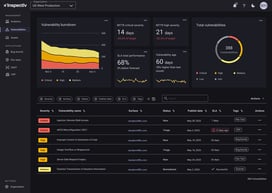
See Inspectiv in Action!
Schedule a live demo to see how our platform helps you manage vulnerabilities, reduce noise, and stay compliant.
See Inspectiv in Action!
Schedule a live demo to see how our platform helps you manage vulnerabilities, reduce noise, and stay compliant.
Inspectiv Insights
July 7, 2026
Recent Inspectiv findings, and what do to about them.
Read the latest insights
Application Security
October 26, 2026
7 VDP Triage Bottlenecks and How to Fix Them
Read the latest blog
SOC 2 compliance is often treated as a documentation exercise. For distributed teams, that assumption doesn’t hold for long. Remote work, cloud-native stacks, third-party software, and rapid deployment cycles stretch traditional internal controls thin. What looks clean on paper quickly diverges from how systems and people operate. By the time auditors arrive, teams are scrambling to reconcile policy with reality.
This is where SOC 2 compliance quietly breaks down.
In this article, we’ll look at why distributed teams struggle with SOC 2 requirements, where audits commonly surface gaps, and how security programs can evolve beyond point-in-time controls without turning compliance into a full-time job.
Early in that journey, many teams lean on external testing and validation. This is why approaches like pentesting and bug bounty often show up in SOC 2 evidence packages, not as silver bullets, but as proof that controls are actually being exercised.
SOC 2 compliance fails for distributed teams when controls assume centralized ownership, static systems, and predictable workflows. Auditors expect evidence that security controls operate continuously, not just at a single point in time. Teams that treat SOC 2 as an ongoing operating model, supported by real-world testing and clear accountability, reduce audit friction and security risk at the same time.
At its core, SOC 2 is built around systems and organization controls defined by the Trust Services Criteria: security, availability, processing integrity, confidentiality, and privacy.
These criteria are overseen by the American Institute of Certified Public Accountants, and assessed by licensed CPAs during a SOC 2 audit.
The framework assumes that:
Distributed teams challenge every one of those assumptions.
Cloud infrastructure changes weekly. Engineers deploy from multiple time zones. Vendors handle sensitive data outside your direct control. Security responsibilities blur across DevOps, IT, and compliance.
SOC 2 compliance doesn’t break because teams don’t care about security. It breaks because the operating model has changed faster than the control model.
One of the most common audit failures stems from controls that only work at a single point in time.
Policies get approved. Screenshots get captured. Access reviews happen right before the audit window. On paper, everything looks aligned.
Auditors, however, increasingly test whether those controls operate continuously. For SOC 2 Type II reports, that means evidence over months, not moments.
This is where distributed teams struggle:
A SOC 2 report that relies on snapshots instead of sustained evidence invites findings around data security, information security, and security posture.
Many organizations ask: Who should be involved in SOC 2 readiness?
In distributed environments, the answer is rarely a single team.
SOC 2 compliance touches:
Without clear ownership, internal controls degrade. Evidence becomes inconsistent. Auditors flag gaps not because controls don’t exist, but because no one can confidently prove they’re enforced.
This fragmentation is one reason many teams centralize vulnerability reporting and evidence within platforms, rather than chasing screenshots across Slack and shared drives.
Auditors don’t just ask whether logging exists. They ask how logs are reviewed, retained, and acted upon.
For distributed teams, logging and monitoring often span:
SOC 2 auditors typically expect evidence that:
When logs live in multiple tools without centralized oversight, teams struggle to demonstrate processing integrity and confidentiality. This is where SOC 2 audits surface deficiencies, even when technical controls are present.
SOC 2 does not prohibit remote work, BYOD, or distributed teams. But it does require that risks introduced by those models are acknowledged and controlled.
Auditors often look for clarity around:
When policies assume an office-centric environment, but reality doesn’t match, auditors notice. SOC 2 compliance depends on alignment between documented controls and lived workflows.
Distributed teams rely heavily on vendors. Each vendor handling sensitive data expands your SOC 2 scope.
Auditors typically expect:
This is where SOC 2 compliance intersects with broader frameworks like ISO 27001. Both emphasize continuous risk assessment, not one-time questionnaires.
Articles like this one are often share internally to help teams understand why vendor testing matters beyond procurement checklists and one-time risk reviews.
Many teams ask whether continuous security testing actually helps with SOC 2 compliance.
The short answer is yes, when implemented correctly.
Bug bounty programs, VDPs, and scoped pentesting don’t replace internal controls. They provide
independent validation that security controls are functioning in real environments.
From an audit perspective, these programs help demonstrate:
This is why VPD programs often show up as supporting evidence in SOC 2 audits, especially for distributed teams with large attack surfaces.
The biggest risk to SOC 2 compliance isn’t technical failure. It’s treating the audit as a finish line.
Distributed teams change constantly. Systems evolve. People join and leave. Controls that aren’t revisited drift out of alignment.
Organizations that maintain SOC 2 compliance between annual audits typically:
When SOC 2 becomes part of how teams operate, not a once-a-year scramble, compliance stops breaking under scale.
SOC 2 compliance doesn’t fail because teams lack effort. It fails when controls can’t keep up with how work gets done.
If your organization is scaling fast, operating remotely, or relying on third-party software, it’s worth pressure-testing whether your SOC 2 controls reflect reality, not just policy. Continuous validation, clear ownership, and real-world testing make the difference between an audit scramble and sustained confidence.
If you want to explore how ongoing security testing supports audit readiness without slowing teams down, Inspectiv can help you take a practical next step.
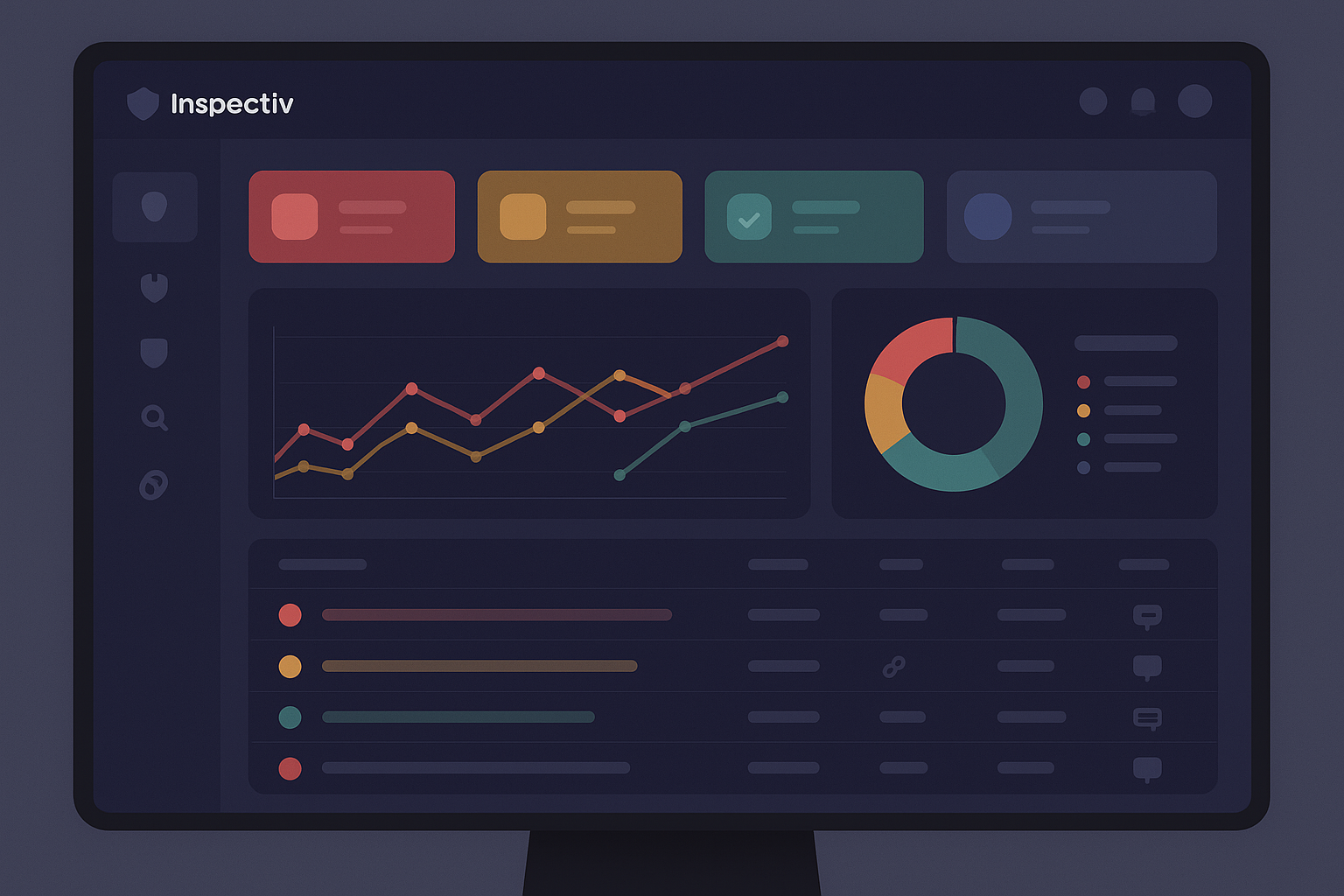
Ready to level up your AppSec program? Book a personalized demo to see how Inspectiv helps you uncover real risks, streamline workflows, and scale your security program through one unified platform designed to operate the way your team does.






.svg?width=32&height=32&name=icon%20(1).svg)
.svg?width=32&height=32&name=icon%20(2).svg)
.svg?width=32&height=32&name=icon%20(3).svg)