In the world of cybersecurity, vulnerability management often feels like a never-ending game of whack-a-mole. Your scanners, penetration testers, and bug bounty hunters consistently deliver comprehensive lists of security gaps. But faced with hundreds, sometimes thousands, of reported issues, security teams inevitably fall into the trap of endless triage, struggling to translate findings into meaningful risk reduction.
For B2B companies handling sensitive client data, proprietary algorithms, or critical infrastructure, merely logging vulnerabilities isn't enough; rapid prioritization of remediation is the difference between a minor incident and a catastrophic breach. The central challenge isn't just finding the bugs, it’s knowing which one to address first and, critically, how to fix it immediately.
The Barrier to Risk Reduction: Triage Paralysis
Most organizations start their triage process with severity scores, which are vital as a baseline. However, the sheer volume of findings, coupled with the mismatch between theoretical risk scores and operational reality, creates "triage paralysis." Security teams are stuck classifying, not fixing.
The truly hard part of prioritization is translating potential issues into a ranked list of urgent, context-specific fixes. This classification delay, the time between discovery and starting to fix, is where true organizational risk compounds and the window of exposure widens.
As a further problem, most organizations could keep a team 10x larger than they have busy 24/7 and still not address vulnerabilities as fast as they’d like.
Three Keys to Contextual Remediation Prioritization
To truly accelerate the fix process, your prioritization framework must incorporate three critical, often overlooked, dimensions: Exposure, Exploitability, and Business Impact.
1. Exposure: Where Is It Living?
Risk is zero if no one can reach the vulnerability. Prioritization must immediately factor in asset criticality and accessibility.
- Internet Exposure: Is the asset directly reachable from the public internet?
- Internal Criticality: Does the asset handle PII, financial transactions, or proprietary source code?
- Deployment Frequency: How often is this code deployed? Patching a flaw in a service deployed hourly yields faster risk reduction than patching a flaw in a stable, rarely updated legacy system.
Some of these, but not all, are captured by CVSS.
2. Exploitability: Is There a Clear Path to Compromise?
This is where threat intelligence and security research become indispensable. A high-signal report confirms a reliable exploit path, often including a known, simple Proof-of-Concept (PoC). Regardless of the theoretical severity score, a demonstrated path to compromise means that remediation moves immediately to the front of the line to minimize potential exposure time.
3. Business Impact: What Happens When It Fails?
This forces a necessary collaboration between Security and Product/Operations teams. If exploiting Vulnerability X causes your primary revenue stream to halt for 48 hours, it must be prioritized over a flaw in a non-critical internal tool. True risk reduction means minimizing the chance of an incident that directly damages your bottom line or violates regulatory mandates. Any process risking human health or life has a much higher business impact than any others.
Bridging the Gap: From Finding to Rapid Fix with Focused Intel
Where do you get the clearest, most contextualized intelligence on exploitability and high-value business logic flaws? Not solely from broad, infrequent scans, but from dedicated, targeted security research that provides new vulnerabilities and provides a clear path to action.
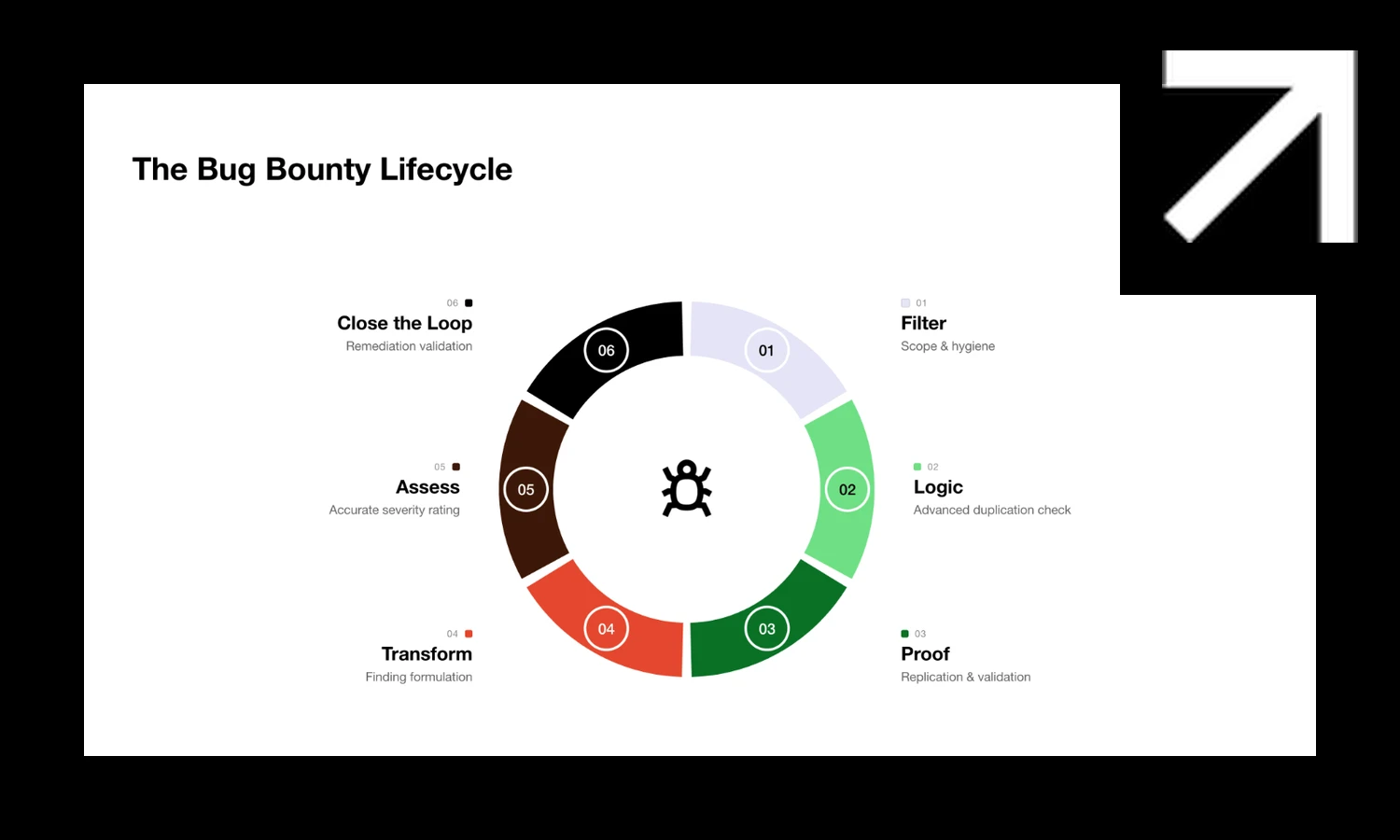
This is the core advantage of a mature Bug Bounty program, particularly the private, scoped programs that Inspectiv specializes in for building. Unlike a general pen test that concludes after two weeks, a continuous private program provides an ongoing stream of high-fidelity, context-aware intelligence (Of course Inspectiv offers those too, as well as Feature Testing and Vulnerability Disclosure Programs).
Researchers participating in your private program, often hailing from diverse technical backgrounds and methodologies, are incentivized and scoped to focus specifically on your critical business processes. They are clever enough to uncover non-obvious, complex business logic flaws that automated scanners and even AIs are not as likely to find. Their creative, high-signal reports include detailed reproduction steps and crucially proof-of-concept exploits that directly map to real-world business impact.
This high-signal input allows your team to bypass the noise and instantly slot findings into the top tier of your remediation queue based on demonstrated exploitability and direct business relevance. Many of our customers take our findings as accurate due to our high signal and immediately proceed to remediation. Inspectiv provides expert guidance to ensure these high-signal findings are instantly actionable and move your team's focus from triage paralysis to rapid, targeted risk elimination.
Stop treating all vulnerabilities equally. Start prioritizing remediation based on context, exposure, and demonstrable threat. Inspectiv helps B2B leaders transform disparate vulnerability data into actionable, risk-reducing priorities. Ready to accelerate your security posture? Schedule a demo to discover the power of focused, continuous security intelligence.












.svg?width=32&height=32&name=icon%20(1).svg)
.svg?width=32&height=32&name=icon%20(2).svg)
.svg?width=32&height=32&name=icon%20(3).svg)