Platform
Explore Inspectiv’s AI-enabled platform that integrates Bug Bounty, Pentesting, Feature Testing, and VDP, designed to cut through noise and deliver signal-driven results.

%20is%20Your%20Next%20Best%20Practice-1.webp?width=1250&height=750&name=Elevating%20Security%20Posture_%20Why%20Continuous%20Threat%20Exposure%20Management%20(CTEM)%20is%20Your%20Next%20Best%20Practice-1.webp)
In the dynamic world of cybersecurity, the traditional approach to security testing is quickly becoming obsolete. Remember the days when a yearly penetration test was considered sufficient, such as early PCI-DSS? Today’s threat landscape evolves faster than a zero-day exploit goes viral. If your security posture is only assessed when you remember to schedule a pentesting engagement, you're essentially driving with your eyes closed on a Formula 1 track for the rest of the year.
This is where Continuous Threat Exposure Management, or CTEM, steps in—it’s not just an upgrade; it’s a necessary evolution for any organization serious about risk mitigation.
For buyers of security testing services, understanding CTEM is paramount. It moves beyond periodic vulnerability scanning and even beyond scheduled security testing. CTEM is a proactive, continuous, and measurable approach designed to prioritize and remediate the most important exposures before they become breaches. Think of it as having a perpetually running diagnostic on your digital health, ensuring you’re always optimizing for the smallest attack surface.
Trick question.
CTEM incorporates traditional methods. Surely there are shortcomings to many individual testing methods. SAST is blind to attacks on dynamic code. Bug bounty doesn’t always systematically seek known weaknesses. Pen tests shine a light on point in time, but not over time.
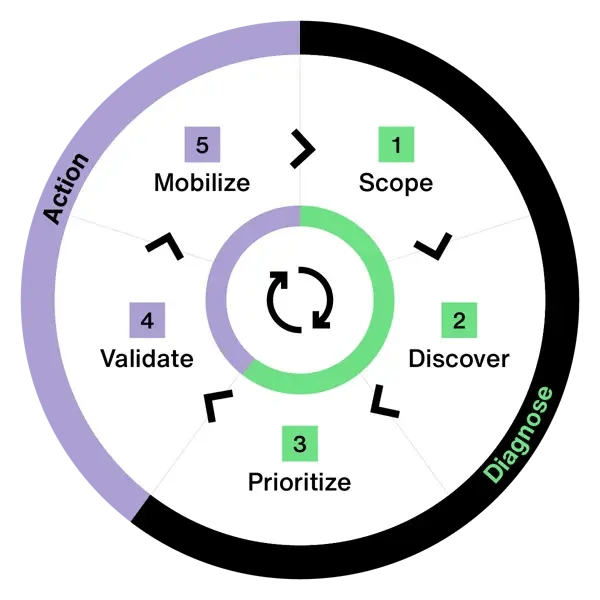
In a perfect world, CTEM integrates these signals—along with automated testing, threat intelligence, and attack surface discovery—into a constant feedback loop. As a reminder, CTEM encourages a process loop involving Scoping, Discovery, Prioritization, Validation, and Mobilization (such as Remediation or process improvements). Read about it here.
The core difference lies in the continuous nature of validation. Instead of asking, "Are we secure right now?" CTEM asks, "What are the most likely ways we will be exploited in the next hour, and what is our immediate plan to mitigate that specific path?" It combines threat intelligence insights with vulnerability management discipline to know weaknesses and likely attacks simultaneously.
A robust CTEM program isn't just a piece of software; it's a methodology built on several interlocking components. Security buyers looking to adopt this model need to ensure their chosen platforms or service providers can handle these critical pillars:
You can’t protect what you don’t know you have. Modern organizations spin up cloud assets, shadow IT systems/software, and ephemeral environments daily. A key component of CTEM is constantly mapping and validating your external and internal attack surface. This goes far beyond just knowing your IP ranges; it involves understanding exposed services, misconfigured S3 buckets, and forgotten staging environments that might as well be neon signs pointing to your sensitive data. Finding these hidden assets is step one.
Raw vulnerability counts are noise. CTEM excels here by simulating real-world attacker thinking. So does bug bounty. It connects the dots between a low-risk misconfiguration and a high-impact breach scenario. This is where CTEM proves its worth to the budget holder: it ensures remediation efforts focus on the paths most likely to be walked by malicious actors.
This is where security testing vendors really need to step up. It’s not enough to just find a flaw; you must validate that the fix worked. If your team patches a vulnerability identified through a VDP (Vulnerability Disclosure Program) channel, proper platforms can re-test that specific vector to confirm closure. This tight feedback loop minimizes the chance of false positives being marked as resolved, saving valuable engineering time. This author can’t help but note that Inspectiv does deliver remediation validation long after the time horizon of a typical pen test for its customers.
Savvy security buyers understand that CTEM doesn't replace your existing successful programs; it optimizes them. If you run a bug bounty program, those high-quality, deep-dive findings are invaluable data points. CTEM-enabling platforms should ingest these results, use them to inform attack path simulations, and ensure those critical vectors are monitored continuously. Features such as structured scoping, remediation validation, and high quality reports that are not just chat logs with hackers are essential.
Similarly, pentesting provides deep architectural insights that automated tools often miss. CTEM uses the scope and findings from a pentest as a baseline, immediately incorporating those validated weaknesses into the continuous monitoring loop. Think of traditional security testing as getting a high-resolution photograph of your security health on a specific date, and CTEM as the live HD video feed.
This movement towards measurable, continuous security demands sophisticated tooling. This is where platforms like Inspectiv shine. They embrace the CTEM philosophy, providing the necessary automation and intelligence to manage the ceaseless flow of security data. For security buyers transitioning to a CTEM model, Inspectiv creates the ability to stitch together disparate security signals—from automated scanning to human-led security testing—into an actionable, prioritized risk register.
They understand that achieving true security maturity means shifting resources away from chasing low-hanging fruit identified weeks ago and toward eliminating the highest-probability, highest-impact attack paths today. Integrating Inspectiv into your security stack ensures that your investment in security testing isn't just producing reports; it's driving measurable, continuous reduction in your actual exposure.
In conclusion, adopting CTEM isn't optional; it’s the new baseline for responsible security governance. It provides structure to what could otherwise be a long and arduous security journey from reactivity to robust, proactive security that can better thwart attackers. Your CFO (and perhaps your IT team, after a few late nights fixing old bugs) will thank you.
Ready to level up your AppSec program? Book a personalized demo to see how Inspectiv helps you uncover real risks, streamline workflows, and scale your security program through one unified platform designed to operate the way your team does.










.svg?width=32&height=32&name=icon%20(1).svg)
.svg?width=32&height=32&name=icon%20(2).svg)
.svg?width=32&height=32&name=icon%20(3).svg)