Why Enterprise Security Teams Need To Listen With Vulnerability Disclosure Programs
Modern enterprise security teams face an escalating challenge: managing an ever-increasing volume of vulnerability reports from diverse sources while maintaining operational efficiency. Thank the complexity of software, pacing of business, and increase in use of AI on all sides to find problems. As organizations expand their digital footprint, the number of potential security researchers, users, ethical hackers, and external security professionals discovering vulnerabilities grows rapidly. Without a centralized vulnerability disclosure program platform, security teams struggle with fragmented communication channels, inconsistent reporting formats, and the operational burden of triaging submissions across email, social media, contact forms, and ad-hoc channels. The days of "security@" are gone.
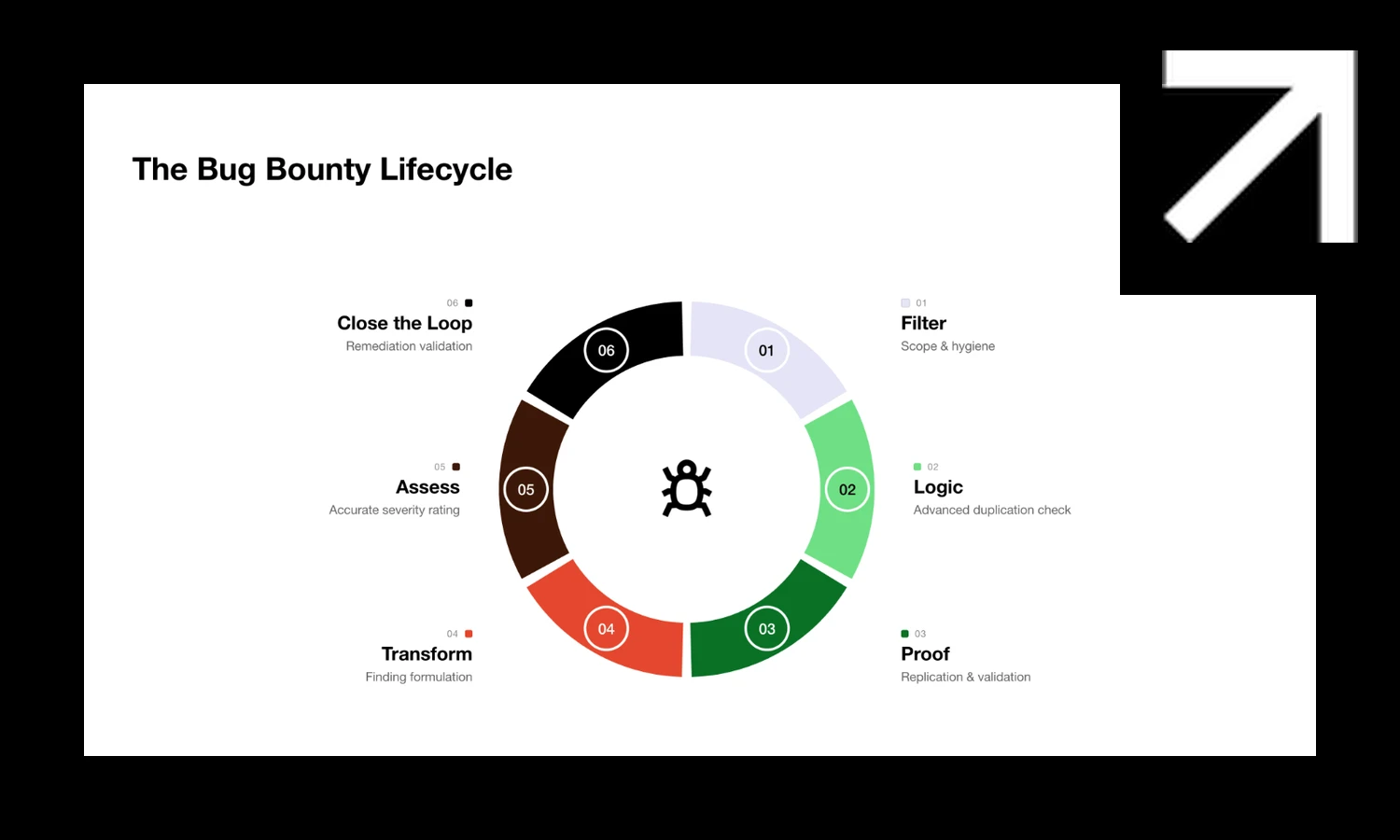
A vulnerability disclosure program platform serves as the unified hub for intake, triage, validation, and remediation workflows. Enterprise and mid-market organizations implementing centralized VDP solutions report significant reductions in operational noise and improved response times to critical security issues.
Organizations leveraging vulnerability disclosure management software can standardize their intake processes, apply consistent severity assessments, and create defensible technical evidence for audits and regulators. TThis centralization enables security teams pumps up overall efficiency so busy teams can focus their expertise on validation and remediation rather than managing the chaos of unstructured submissions, often of dubious quality.
If You Think Just Receiving Vuln Reports is Bad, Try Triaging Them
The reality of vulnerability disclosure programs often diverges sharply from expectations. While receiving security reports from external researchers provides valuable intelligence, the operational burden of triaging these submissions can overwhelm even well-resourced security teams. While most people who submit a report with no expectation of reward (as is normal for VDPs) are typically well-motivated, sometimes they believe they're 100% right when their report may not be quite as high-quality as they hoped.
Organizations frequently experience an unmanageable flood of low-quality submissions that strain internal resources, with duplicate reports, false positives, and incomplete information creating significant noise that obscures genuine security concerns.
Even when submission volume is low, triage can represent the most resource-intensive phase of vulnerability disclosure management. Since any report can be a serious, valid vulnerability, reports need to be carefully evaluated. This can result in organizations often allocating substantial engineering time to validating submissions that lack sufficient proof-of-concept evidence or fail to represent actual exploitable vulnerabilities. This operational burden diverts security talent from strategic initiatives and creates alert fatigue that increases the risk of overlooking critical issues.
Security teams leveraging vulnerability disclosure management software report dramatic reductions in time spent on administrative tasks, allowing them to focus on rapid vulnerability remediation and continuous risk reduction. By filtering out noise and delivering validated findings in days rather than weeks, these platforms convert the challenge of vulnerability triage from a resource drain into a strategic advantage that strengthens overall security posture.
Building Compliance-Ready Vulnerability Management Workflows
Regulatory frameworks and compliance standards increasingly mandate formal vulnerability disclosure processes as evidence of proactive security management. Organizations pursuing SOC 2 compliance, ISO 27001 certification, or HIPAA security requirements must demonstrate structured approaches to identifying, tracking, and remediating security vulnerabilities. Enterprise vulnerability disclosure programs provide the documentation, audit trails, and process controls that auditors expect, transforming compliance from a periodic scramble into an ongoing capability.
Compliance-ready vulnerability workflows span the full lifecycle—from intake to validated remediation—rather than simple bug tracking. Auditors expect centralized remediation tracking that records initial submission details, triage decisions, severity, ownership, implementation of fixes, and verification of resolution. This end-to-end evidence both satisfies regulators and provides clear visibility into remediation SLAs, fix rates, and time-to-remediation, demonstrating continuous improvement.
Integrating VDP With Continuous Security Testing And Remediation Tracking
The most effective enterprise security programs recognize that vulnerability disclosure programs represent one component of a comprehensive security testing strategy. Organizations achieve maximum risk reduction by integrating VDP with continuous security testing methodologies including penetration testing, feature testing, and crowdsourced security testing integration. That's on top of software-only components such as SAST and DAST which are table stakes. This unified approach leverages diverse attacker mindsets and skills to identify vulnerabilities across the application lifecycle, from development through production deployment.
Continuous testing integrated across CI/CD pipelines transforms security from a gating function into an enabling capability that supports rapid development without compromising security standards. Vulnerability disclosure management software that connects external researcher submissions with internal development workflows ensures that security concerns identified in production can be traced back to specific features or code changes. This integration provides developers with contextual information, proof-of-concept exploits, and remediation guidance tailored to their specific environments, accelerating fix implementation while improving code quality.
Remediation tracking represents the critical feedback loop that closes the gap between vulnerability identification and verified resolution. Enterprise vulnerability disclosure platforms provide mechanisms to validate that fixes work and confirm closure of vulnerabilities, delivering remediation validation long after typical penetration testing time horizons. This ongoing validation catches regression issues, verifies that patches address root causes rather than symptoms, and transforms remediation into verified fixes that reduce security debt. By extending the relationship with security researchers beyond initial discovery to include validation of fixes, organizations leverage global community expertise throughout the entire vulnerability lifecycle, achieving continuous risk reduction through ongoing validation.












.svg?width=32&height=32&name=icon%20(1).svg)
.svg?width=32&height=32&name=icon%20(2).svg)
.svg?width=32&height=32&name=icon%20(3).svg)