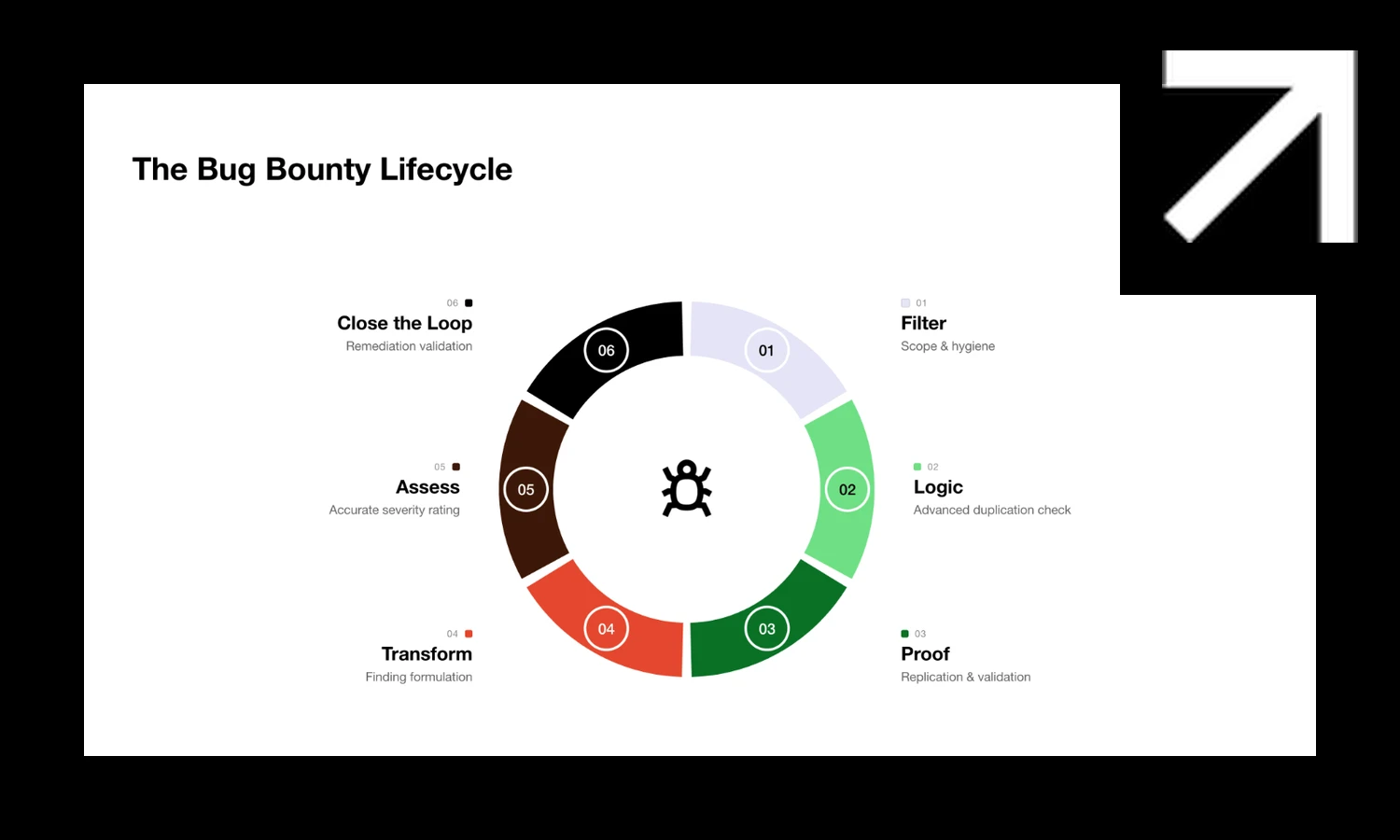
Our sales team at Inspectiv hears this all the time: "We recognize the value of a bug bounty program; it simply isn’t on our immediate roadmap." This hesitation is typically rooted in practical concerns—budgetary constraints, limited engineering bandwidth, or a lack of familiarity with the operational nuances of crowdsourced security. Baked into this thinking is the assumption that bug bounty is a "switch" to be flipped only after achieving a certain level of cybersecurity maturity. We’re going to explore that assumption and to the surprise of no one, will come to the conclusion that most organizations are ready for bug bounty programs now (with a few exceptions). Read on…
Understanding the Continuous Testing Paradigm
To understand why early exploration is vital, one must distinguish between traditional penetration testing and bug bounty programs. Penetration testing is structured, time-boxed, and predictable. It serves as a necessary compliance and baseline security check, providing a methodical review of a defined environment within a specific window. However, attackers do not operate on a schedule. They are continuous, creative, and motivated by edge cases and business logic flaws that a standard test plan might overlook. Bug bounty programs leverage a global community of researchers who think like attackers, providing the continuous, creative pressure necessary to harden systems against real-world exploitation.
Because of this fundamental difference in methodology, bug bounty programs often uncover entirely different classes of vulnerabilities. Organizations that view bug bounty as merely "another pentest" are frequently caught off guard by the volume and variety of findings. By engaging with the concept of crowdsourced security early, teams begin to shift their mindset from periodic checklists to a state of continuous readiness. This preparation ensures that when a program does go live, the internal infrastructure for remediation is already conditioned to handle dynamic, high-impact findings.
What is Bug Bounty-ready "Maturity"
A common misconception is that a security posture must be "perfect" before inviting external researchers. This "maturity fallacy" often creates a false sense of security. Security maturity is not a destination achieved through a single perfect control; it is the result of layered, redundant coverage. When teams postpone bug bounty exploration, they often overestimate the protection provided by point-in-time assessments and automated scanners. Adversaries do not wait for a roadmap to mature; they exploit the gaps that exist today. Exploring bug bounty early helps organizations identify where continuous testing fits into their risk model, turning security from a reactive hurdle into a proactive business advantage.
That being said, it would be a rare organization that takes on bug bounty programs (or pen tests) without at least some software-only scanning for known vulnerabilities. Thankfully, it’s also rare for such organizations to end up in contact with our sales team. Scan first, then engage humans. This is the exception noted above.
Low-Risk Exploration Strategies
Exploring the bug bounty ecosystem does not require an immediate commitment to a massive, public-facing program. On the contrary, the most successful implementations often begin with a small scope, and they are sometimes even paused. Not all bug bounties programs are public.
The vast majority are private, invite-only programs that offer a controlled environment where a select group of trusted researchers provides high-quality feedback without the noise of a public launch. This early exposure builds essential alignment between engineering, security, and executive leadership, ensuring that expectations are calibrated long before the first report arrives.
Operationalizing the Program: Beyond the Chaos
Despite the clear benefits, bug bounty often suffers from a reputation problem. Many fear being overwhelmed by low-quality reports, "beg-bounties," or unpredictable costs. These challenges, however, are typically symptoms of poorly structured programs rather than inherent flaws in the bug bounty model. A well-designed program prioritizes control and clarity. It begins with a rigorous definition of scope—clearly identifying which assets are fair game and which are strictly off-limits. For companies, using a bug bounty platform to handle all interactions with researchers is very convenient. The aggressive researchers who contact companies directly when there is a bug bounty program in place are typically not on a bug bounty platform for long.
Triage by the platform experts is the engine that drives a successful program. Validating findings, removing duplicates, and contextualizing risk requires specialized expertise. Effective triage transforms raw researcher data into meaningful engineering tasks. When findings integrate seamlessly into existing developer workflows—such as Jira, GitHub, or Slack—security becomes a natural part of the development lifecycle rather than an external disruption. This focus on the "developer experience" is what allows a program to scale without causing burnout or friction between departments.
We recently asked one of our internal penetration testers what separates the most secure organizations from everyone else. His answer was telling.
In his experience, the difference in security hardening between organizations that have never been tested, those that have done a one-time pentest, and those running continuous bug bounty and penetration testing programs is staggering. For that last group, finding vulnerabilities is roughly 90% harder — because ongoing testing and remediation compounds over time in ways a single engagement simply can't replicate. Security isn't a destination. It's a discipline.
An Iterative Approach to Resilience
No security program is static. As business goals evolve and tech stacks change, so too must the testing strategy. The strongest bug bounty programs are iterative; they grow in scope and complexity as the organization’s confidence increases. By starting the learning process early, organizations move from a defensive, reactive posture to one of informed, strategic resilience. They begin to ask better questions during the design phase: How would an attacker exploit this business logic? What happens if this primary control fails? These questions strengthen the organization’s security culture regardless of when the official program "goes live."
Stop waiting for the perfect moment. The truth is, the process of starting—learning to think like an attacker and getting continuous feedback—is what makes your team ready. Bug bounty is less a checklist and more a living system. It’s the best way to stay ahead of the curve and be the one controlling your risk, not the adversaries.














.svg?width=32&height=32&name=icon%20(1).svg)
.svg?width=32&height=32&name=icon%20(2).svg)
.svg?width=32&height=32&name=icon%20(3).svg)