Platform
Explore Inspectiv’s AI-enabled platform that integrates Bug Bounty, Pentesting, Feature Testing, and VDP, designed to cut through noise and deliver signal-driven results.

INSPECTIV INSIGHTS #1

Every day, Inspectiv researchers uncover real weaknesses across production, staging, and supporting systems. These findings are rarely caused by a single bad decision. More often, they appear where useful engineering patterns — flexible APIs, operational endpoints, verbose diagnostics, shared service accounts — cross a trust boundary they were never designed to enforce.
Below are three high-impact patterns recently identified across customer environments, along with practical defenses your teams can apply immediately. Some details have been changed for educational purposes.
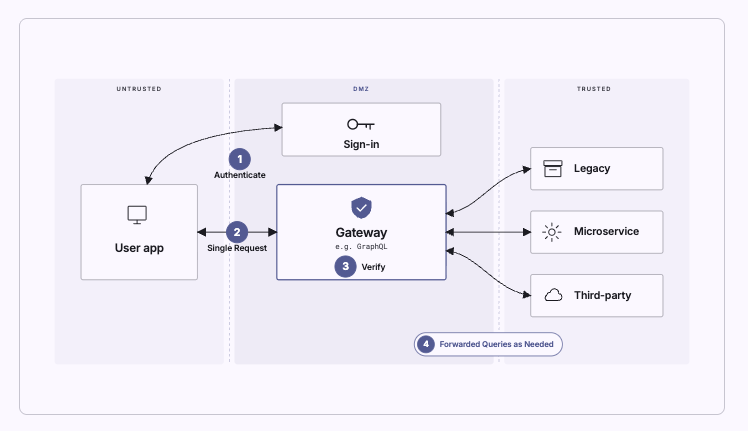
Modern applications expose a large number of public routes: REST APIs, GraphQL endpoints, CMS routes, mobile backends, upload services, webhook handlers, and temporary processing endpoints. Many of these are meant to be reachable from the internet. That does not mean they should be allowed to perform internal-grade work.
In recent findings, researchers identified public-facing endpoints that could return raw object metadata, interact directly with backend database logic, or write server-executable content into a web-accessible path. The common issue was not simply that the endpoints existed. It was that they were reachable from outside the trust boundary while still holding internal levels of authority.
A simplified version of the pattern looks like this:
GET /api/content/post/{id}
Host: public.example.com
Instead of returning a narrow public object, the endpoint returned raw backend metadata:
{
  "id": 9000,
  "title": "Order Support Request",
  "metadata": {
    "_billing_first_name": "Bobby",
    "_billing_last_name": "Tables",
    "_billing_email": "btables@company.com",
    "_billing_phone": "212-555-1212",
    "_customer_ip_address": "192.168.0.1",
    "_internal_file_path": "/var/www/[redacted]/uploads/..."
  }
}
A second example involved a public operational endpoint that could write a generated page:
POST /service/request?action=write&filename=status-page.server-ext HTTP/1.1
Host: public.example.com
Content-Type: text/plain

<h1>Status page</h1>
<p>Ticket SUP-10482 is pending review.</p>
The server responded with a public URL for the generated file:
HTTP/1.1 201 Created
Content-Type: application/json

{
  "status": "created",
  "public_url": "https://public.example.com/uploads/status-page.server-ext"
}
A second request then loaded that generated file from the public web path:
GET /uploads/status-page.server-ext
Host: public.example.com
The server returned the generated page:
HTTP/1.1 200 OK
Content-Type: text/html

<h1>Status page</h1>
<p>Ticket SUP-10482 is pending review.</p>
The issue is that a public endpoint was able to write content into a location that the web server later served as an application page.
Public endpoints often start as integration points. They may be created for mobile clients, partner workflows, CMS extensions, analytics, media processing, customer support, or staging validation. Over time, the original assumptions around who can access them may become outdated.
A route that looks ordinary from the outside may still have access to sensitive backend operations:
Public caller
   |
   v
Internet-facing route
   |
   +--> Reads internal object metadata
   +--> Calls database with service-level privileges
   +--> Writes files to a server-managed directory
   +--> Returns framework errors or backend output
The most interesting endpoint is often not the main login flow or the checkout page. It is the route nearby that was built to make an operational process easier.
Security teams often think about data exposure as a clean database dump, a stolen file, or a compromised admin panel. In practice, the application’s normal responses may leak enough information to become the breach path themselves.
Recent findings showed sensitive data exposed through raw metadata responses, backend error messages, and command output rendered directly back to the browser. In each case, the application provided the attacker with a feedback loop. The researcher did not need a polished export function. The system explained itself one response at a time.
One finding involved a GraphQL-style query where a sort field influenced backend SQL behavior:
query {
  apps(
    sort: {
      field: "title,\' OR 1=1",
      order: "ASC"
    },
    pagination: {
      page: 1,
      perPage: 1
    }
  ) {
    list {
      title
    }
  }
}
The response exposed internal database details through an error message:
{
  "errors": [
    {
      "message": "invalid input syntax for type integer: \"title=SQLSTATE[HY000] [1045] Access denied for user 'reporting_app'@'10.42.18.73'; Database Version: PostgreSQL 14.9; Database User: reporting_app; Internal Address: 10.42.18.73\"",
      "path": ["apps"],
      "extensions": {
        "code": "INTERNAL_SERVER_ERROR",
        "param": "title"
      }
    }
  ],
  "data": {
    "apps": null
  }
}
Another finding showed command output returned directly to a rendered page after server-side execution:
Program: /bin/sh
Arguments: -c "whoami && hostname && id"

Output:
www-data
app-server-01
uid=33(www-data) gid=33(www-data) groups=33(www-data)
Verbose output is useful during development and troubleshooting. It helps engineers debug quickly, validate integrations, and understand why a request failed. That same usefulness becomes dangerous when exposed across a public boundary.
Common examples include:
Bad production response:
DatabaseError: invalid input syntax for type integer: 'PostgreSQL 14.9 / reporting_app / 10.42.18.73'

Better production response:
The request could not be processed.

Server-side log:
request_id=req_7f3a91c2
user_id=anonymous
exception=DatabaseError
query_context=apps.title
internal_details=Database Version: PostgreSQL 14.9; Database User: reporting_app; Internal Address: 10.42.18.73
This category can be underestimated because the application is “only returning an error” or “only showing metadata.” But attackers chain small disclosures. A database version informs exploit selection, especially if it has known vulnerabilities that are subsequently patched and therefore missing in later versions.
The initial vulnerability is only one part of the risk story. The larger question is what the environment allows after that first control fails.
In recent findings, researchers observed situations where one weakness opened access to far more capability than necessary. A database-facing API operated with excessive privilege. A file-write path allowed server-side code to execute from a web-accessible directory. A metadata endpoint returned broad records instead of minimal, field-scoped data.
What was intended as a graphic file upload led to RCE accessible via a user-controlled filename.
Consider this simplified backend pattern:
// Risky pattern: user-controlled sort field becomes SQL structure
const sortField = request.query.sort.field;
const sortOrder = request.query.sort.order || "ASC";

const sql = `
  SELECT title, price
  FROM apps
  ORDER BY ${sortField} ${sortOrder}
  LIMIT 20
`;
Even if most callers only send expected values like title or created_at, this design gives the request influence over SQL structure. Escaping values is not enough when the user controls identifiers or query fragments.
A safer pattern is to map external inputs to an allowlisted internal representation:
const SORT_FIELDS = {
  title: "title",
  created_at: "created_at",
  price: "price"
};

const SORT_ORDERS = {
  asc: "ASC",
  desc: "DESC"
};

const sortField = SORT_FIELDS[request.query.sort.field] || "title";
const sortOrder = SORT_ORDERS[request.query.sort.order] || "ASC";

const sql = `
  SELECT title, price
  FROM apps
  ORDER BY ${sortField} ${sortOrder}
  LIMIT $1
`;
The difference is subtle but important: the user chooses from known options. The user does not author part of the query.
The same containment principle applies to file handling. A risky design might look like this:
# Risky pattern: user controls filename and storage path is web-accessible
filename = request.query["filename"]
body = request.body

path = "/var/www/app/public/temp/" + filename
write_file(path, body)
A safer design separates upload, storage, and execution concerns:
ALLOWED_EXTENSIONS = {".jpg", ".png", ".pdf"}

original_name = request.files["file"].filename
extension = get_extension(original_name).lower()

if extension not in ALLOWED_EXTENSIONS:
    reject("Unsupported file type")

safe_name = generate_uuid() + extension

# Store outside the web root
path = "/srv/app/private_uploads/" + safe_name

# Validate content, not just extension
if not content_matches_extension(request.files["file"], extension):
    reject("Invalid file content")

write_file(path, request.files["file"].body)

# Serve later through an authorization-aware download handler
return {
  "file_id": create_file_record(owner=user.id, path=path)
}
Engineering teams often optimize backend services for reliability and speed. A service account may be granted broad permissions so features do not break. A temporary file directory may be placed under the web root so generated content is easy to retrieve. A CMS endpoint may return a full object because multiple frontend components use the same response.
These choices are understandable. They reduce friction. They also increase blast radius.
When containment is weak, a single bug can cross multiple impact categories:
Weak input validation
   |
   v
Unexpected backend behavior
   |
   +--> Verbose errors reveal environment details
   +--> Overprivileged database account expands access
   +--> Web-accessible write path enables execution
   +--> Raw object serialization exposes sensitive metadata
Security leaders should evaluate not only whether a bug exists, but what the system permits once it does.
The common thread across these findings is not that teams missed obvious issues. It is that useful backend capabilities became reachable in ways the system did not fully constrain.
That is exactly where security testing provides value. Researchers find the routes, parameters, errors, and service boundaries that look ordinary but behave with too much authority.
That’s it for this edition. Join us next month for more Inspectiv Insights.









.svg?width=32&height=32&name=icon%20(1).svg)
.svg?width=32&height=32&name=icon%20(2).svg)
.svg?width=32&height=32&name=icon%20(3).svg)